

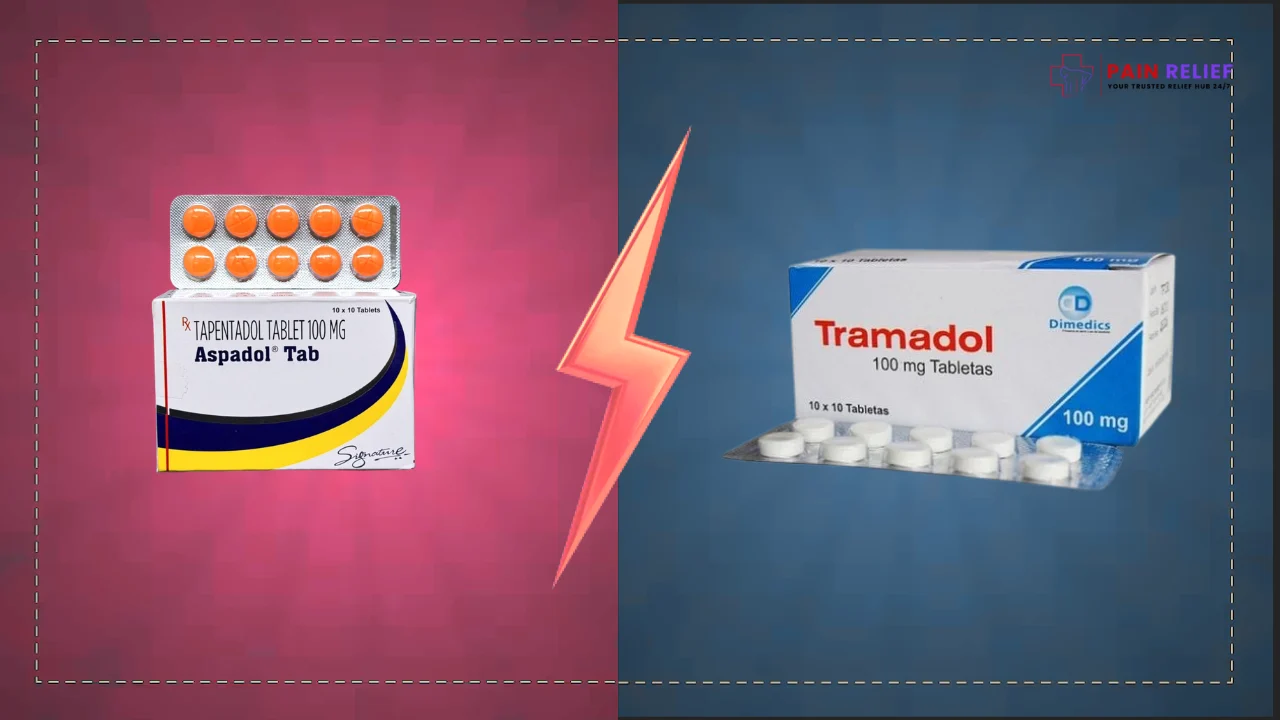
ain management often requires careful selection of medication, especially when dealing with moderate to severe pain. Two commonly prescribed opioid-based analgesics are Tapentadol and Tramadol. Patients and caregivers frequently ask the same question: Is Tapentadol stronger than Tramadol?
While both medications are used to relieve pain, they differ significantly in how they work, how strong they are, and how the body responds to them. Understanding these differences is essential for making informed decisions under medical guidance.
This article provides a clear, medically reviewed comparison of Tapentadol and Tramadol, focusing on strength, effectiveness, safety, side effects, and long-term use considerations.
What Is Tapentadol?
Tapentadol is a centrally acting opioid analgesic used to treat moderate to severe pain. It is often prescribed when standard painkillers such as NSAIDs or weaker opioids are not sufficient.
What makes Tapentadol unique is its dual mechanism of action:
- μ-opioid receptor agonism – reduces pain perception in the brain
- Norepinephrine reuptake inhibition (NRI) – enhances pain signal suppression in the spinal cord
Because of this dual action, Tapentadol can provide strong pain relief while producing fewer serotonin-related side effects compared to some other opioids.
Tapentadol is commonly prescribed for:
- Severe musculoskeletal pain
- Chronic lower back pain
- Neuropathic pain
- Post-surgical pain
It is available in multiple strengths, including 50 mg, 100 mg, and Tapentadol 200 mg, depending on pain severity and patient tolerance.
Tapentadol is available in different strengths, including Tapentadol 100mg tablets, commonly prescribed for moderate to severe pain.
What Is Tramadol?
Tramadol is a synthetic opioid analgesic typically used for mild to moderate pain. It has been widely prescribed for many years and is often considered a step above non-opioid pain relievers.
Tramadol works through:
- Weak μ-opioid receptor binding
- Inhibition of serotonin and norepinephrine reuptake
While effective for many patients, Tramadol’s reliance on serotonin pathways increases the risk of certain side effects, especially when combined with antidepressants or other serotonergic drugs.
Tramadol is commonly used for:
- Moderate post-operative pain
- Osteoarthritis pain
- Short-term injury pain
It is available in immediate-release and extended-release formulations, usually ranging from 50 mg to 100 mg per dose.
Is Tapentadol Stronger Than Tramadol?
Yes, Tapentadol is generally considered stronger than Tramadol, particularly for moderate to severe pain.
Several clinical factors support this conclusion:
- Tapentadol has higher analgesic potency
- It provides faster and more consistent pain relief
- It is effective at lower relative doses
- It causes fewer serotonin-related complications
Tramadol is often classified as a weak opioid, while Tapentadol is positioned closer to strong opioids, though still considered safer than traditional high-potency opioids like morphine or oxycodone when used correctly.
Tapentadol vs Tramadol: Effectiveness for Different Pain Types
| Pain Type | Tapentadol | Tramadol |
|---|---|---|
| Acute severe pain | More effective | Moderately effective |
| Chronic pain | Preferred | Limited benefit |
| Neuropathic pain | Strong efficacy | Less effective |
| Post-surgical pain | Highly effective | Effective |
| Cancer-related pain | Sometimes used | Rarely sufficient |
Tapentadol’s norepinephrine reuptake inhibition plays a significant role in treating nerve-related pain, where Tramadol often falls short.
Side Effects Comparison
Both medications can cause opioid-related side effects, but their profiles differ.
Common Side Effects of Tapentadol
- Dizziness
- Drowsiness
- Nausea
- Constipation
- Headache
Common Side Effects of Tramadol
- Nausea and vomiting
- Dizziness
- Constipation
- Sweating
- Risk of serotonin syndrome
Tramadol carries a higher risk of serotonin syndrome, especially when combined with antidepressants, migraine medications, or other serotonergic drugs. Tapentadol does not significantly affect serotonin pathways, making it safer in this regard.
Also Read: Pregabalin 450 mg Capsules Benefits and Safety Guide
Risk of Dependence and Abuse
Both Tapentadol and Tramadol are controlled substances and carry a risk of dependence if misused.
However:
- Tapentadol tends to produce less euphoric effect than many opioids
- Tramadol’s active metabolites can vary widely between individuals, increasing unpredictability
Long-term use of either medication should always occur under strict medical supervision, with regular reassessment of pain control and side effects.
Dosage Comparison: Tapentadol 100mg vs Tramadol 100mg
Although both medications may appear similar in dosage strength, 100 mg of Tapentadol is not equivalent to 100 mg of Tramadol.
Key differences:
- Tapentadol provides stronger analgesia per milligram
- Tramadol relies on metabolic conversion, which varies between patients
- Tapentadol has a more predictable pharmacological profile
This is why doctors may prescribe lower effective doses of Tapentadol to achieve pain relief that Tramadol cannot provide at the same dosage.
Which Is Safer for Long-Term Use?
Safety depends on individual health factors, but in many cases:
- Tapentadol may be better tolerated for long-term use
- Tramadol poses higher risks related to serotonin interactions and seizures
- Tapentadol has fewer drug-drug interaction concerns
That said, neither medication is intended for indefinite unsupervised use. Long-term pain management should always include regular medical monitoring and, when possible, non-pharmacological pain management strategies.
When Might a Doctor Choose Tapentadol Over Tramadol?
A healthcare provider may prefer Tapentadol when:
- Pain is severe or persistent
- Tramadol has failed to provide relief
- The patient experiences serotonin-related side effects
- Neuropathic pain is present
- Faster onset of action is required
Clinical judgment, patient history, and risk assessment always guide this decision.
Frequently Asked Questions
Is Tapentadol stronger than Tramadol 100mg?
Yes, Tapentadol generally provides stronger and more reliable pain relief than Tramadol at comparable doses.
Can Tapentadol replace Tramadol?
In many cases, doctors may switch patients to Tapentadol if Tramadol is ineffective or poorly tolerated.
Which medication works faster?
Tapentadol typically has a faster onset of pain relief.
Which has fewer side effects?
Tapentadol tends to cause fewer serotonin-related side effects, while overall tolerability depends on the individual.
Conclusion
Tapentadol is widely regarded as stronger and more effective than Tramadol, particularly for moderate to severe and neuropathic pain. Its dual mechanism of action provides reliable pain control with a more predictable safety profile.
However, both medications are prescription-only opioids and should be used only under medical supervision. The choice between Tapentadol and Tramadol should always be based on clinical evaluation, pain severity, and patient-specific factors.
Also Read: Carisoprodol Withdrawal Symptoms and 350 mg Tablet Use