

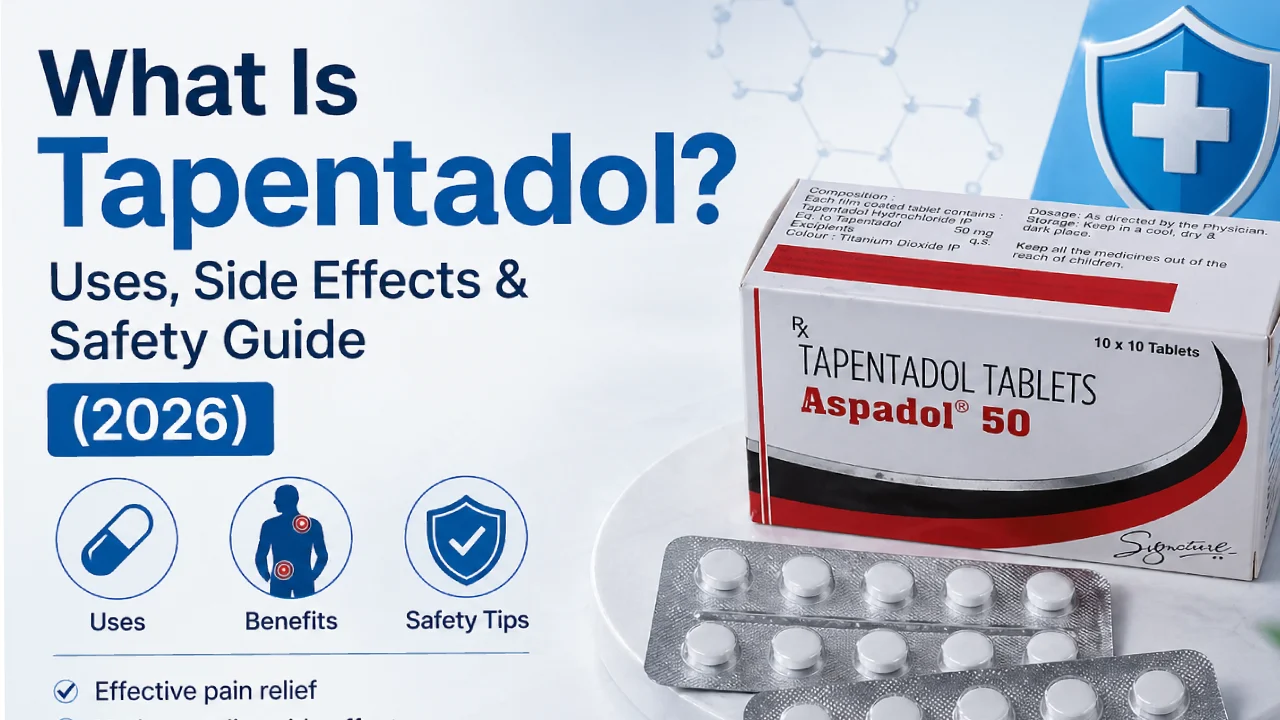
- What Is Tapentadol?
- How Does Tapentadol Work? (Dual Mechanism)
- Approved Uses & Conditions It Treats
- Dosage Forms: 50mg, 100mg & 200mg ER
- Side Effects — Common & Serious
- Tapentadol vs Tramadol: Key Differences
- Safety, Interactions & Who Should Avoid It
- Where to Buy Tapentadol in the USA
- Frequently Asked Questions
If you or a loved one has been prescribed tapentadol — or you're researching pain relief options — you've come to the right place. This guide covers everything a US patient needs to know: what tapentadol is, how it works, what conditions it treats, its side effects, safety profile, and how it compares to other opioids like tramadol.
What Is Tapentadol?
Tapentadol is a centrally-acting opioid analgesic approved by the FDA for the management of moderate-to-severe acute pain and severe chronic pain in adults. It was first approved in 2008 under the brand name Nucynta® and is now widely available in generic form — including under brand names such as Aspadol and Tapaday.
Unlike traditional opioids that rely on a single mechanism, tapentadol combines two distinct pain-relief pathways in a single molecule. This dual action sets it apart from older opioids such as tramadol, oxycodone, and codeine — and is the primary reason for its growing popularity among pain management specialists in the USA.
Drug class: Opioid analgesic (Schedule II controlled substance) | FDA approved: 2008 | Available strengths: 50mg, 100mg IR · 200mg ER | Half-life: ~4 hours (IR), ~5–6 hours (ER) | Route: Oral
How Does Tapentadol Work? (Dual Mechanism)
Tapentadol's effectiveness comes from acting on the nervous system in two complementary ways simultaneously. This is why it works for both sharp, injury-type pain and nerve pain — most opioids only address one of these effectively.
Tapentadol binds directly to mu-opioid receptors in the brain and spinal cord, blocking pain signals from reaching conscious awareness. This is the same pathway used by morphine and oxycodone — but tapentadol binds with lower affinity, reducing the risk of some opioid-class side effects.
Tapentadol also inhibits the reuptake of norepinephrine in the spinal cord. This increases norepinephrine levels, which activates the body's natural pain-suppression pathways. This is particularly effective against neuropathic (nerve) pain — a type of pain that traditional opioids often fail to control adequately.
Because tapentadol works via both opioid and non-opioid pathways, it can achieve the same level of pain control as stronger opioids at comparatively lower doses — which translates to a better side-effect profile, particularly fewer gastrointestinal side effects like nausea and constipation compared to equivalent doses of oxycodone.
Approved Uses & Conditions It Treats
Tapentadol is FDA-approved for two primary indications, and is also used off-label for several other pain conditions:
Post-surgical pain, trauma, dental pain, orthopedic injuries. IR tablets are the standard choice for on-demand acute pain control.
The 200mg ER formulation is specifically approved for severe chronic pain requiring continuous, around-the-clock analgesia.
The ER form is also FDA-approved for neuropathic pain associated with diabetic peripheral neuropathy — a major advantage over pure opioids.
Widely used off-label for severe lower back pain, fibromyalgia, and chronic musculoskeletal conditions unresponsive to NSAIDs.
Used in oncology pain management, particularly for patients who require both nociceptive and neuropathic pain coverage simultaneously.
Increasingly preferred over traditional opioids after major surgeries due to comparable efficacy with a lower GI side-effect burden.
Dosage Forms: 50mg, 100mg & 200mg ER
Tapentadol is available in three standard strengths. Choosing the right one depends on your pain severity, whether your pain is acute or chronic, and your prior opioid experience:
Side Effects — Common & Serious
Like all opioid analgesics, tapentadol carries a risk of side effects. Most common side effects are dose-dependent and tend to improve after the first 1–2 weeks of treatment as the body adjusts.
Side Effects by Frequency & Severity
| Side Effect | Frequency | Severity | Management |
|---|---|---|---|
| Nausea | Very common (>10%) | Mild–Moderate | Take with food; usually improves after 1–2 weeks |
| Dizziness / Drowsiness | Very common (>10%) | Moderate | Avoid driving; do not combine with alcohol |
| Constipation | Common (1–10%) | Moderate | Increase fluids, fibre; consider stool softener |
| Headache | Common (1–10%) | Mild | Usually self-resolving; hydration helps |
| Dry mouth | Common (1–10%) | Mild | Sip water frequently; sugar-free gum |
| Vomiting | Common (1–10%) | Moderate | Take with food; anti-emetics if prescribed |
| Respiratory depression | Rare (<1%) | Serious | Seek emergency care immediately |
| Serotonin syndrome | Rare (<1%) | Serious | Avoid SSRIs/SNRIs without medical guidance |
| Seizures | Rare (<1%) | Serious | Risk higher above 500mg/day; stay within limits |
- Slow, shallow, or stopped breathing
- Extreme drowsiness — unable to be woken
- Blue-tinged lips or fingernails (cyanosis)
- Seizures or muscle rigidity
- Rapid heartbeat with high fever and confusion (possible serotonin syndrome)
Tapentadol vs Tramadol: Key Differences
Tapentadol and tramadol are often compared because both combine opioid and non-opioid mechanisms. However, they differ significantly in potency, predictability, and side-effect profiles:
Safety, Interactions & Who Should Avoid It
Drug interactions to be aware of:
- MAO inhibitors — absolutely contraindicated; can cause life-threatening serotonin syndrome. Stop MAOIs at least 14 days before starting tapentadol
- SSRIs / SNRIs / TCAs — increased serotonin syndrome risk; use with caution and medical supervision
- Benzodiazepines / CNS depressants — combined use increases risk of respiratory depression and death
- Alcohol — potentiates CNS depression; strictly avoid during tapentadol treatment
- Other opioids — do not combine without explicit prescriber guidance
Who should not use tapentadol:
- Patients with severe respiratory depression or acute asthma
- Those with paralytic ileus (bowel obstruction)
- Anyone currently taking or within 14 days of stopping an MAOI
- Patients under 18 years of age (not studied in paediatric populations)
- Pregnant women — risk of neonatal withdrawal syndrome
- Patients with known hypersensitivity to tapentadol or any excipient
As a Schedule II opioid, tapentadol carries a real risk of physical dependence with prolonged use. Do not stop tapentadol abruptly after extended use — this can trigger withdrawal symptoms including restlessness, muscle aches, insomnia, and anxiety. Always taper under physician supervision.
Where to Buy Tapentadol in the USA
Tapentadol is a Schedule II controlled substance in the USA, meaning a valid prescription is required for legal purchase. PainReliefHub24 carries all three standard strengths with fast, discreet delivery across all US states:
- Aspadol 50mg — ideal entry-level dose for opioid-naive patients and mild-to-moderate acute pain
- Aspadol 100mg — the most widely prescribed IR strength for post-surgical and injury-related pain
- Tapaday 200mg ER — extended-release tablet for severe chronic pain requiring around-the-clock coverage
Order Tapentadol — Fast USA Delivery
All strengths in stock. Discreet packaging. Shipped across the USA.
Shop All Pain Medications →Frequently Asked Questions
Is tapentadol stronger than tramadol?
Is tapentadol an opioid?
Can tapentadol be used for nerve pain?
How long can I take tapentadol?
Does tapentadol cause less constipation than other opioids?
Can I drink alcohol while taking tapentadol?
Written and reviewed by

Health Content Writer & Medical Research Contributor