

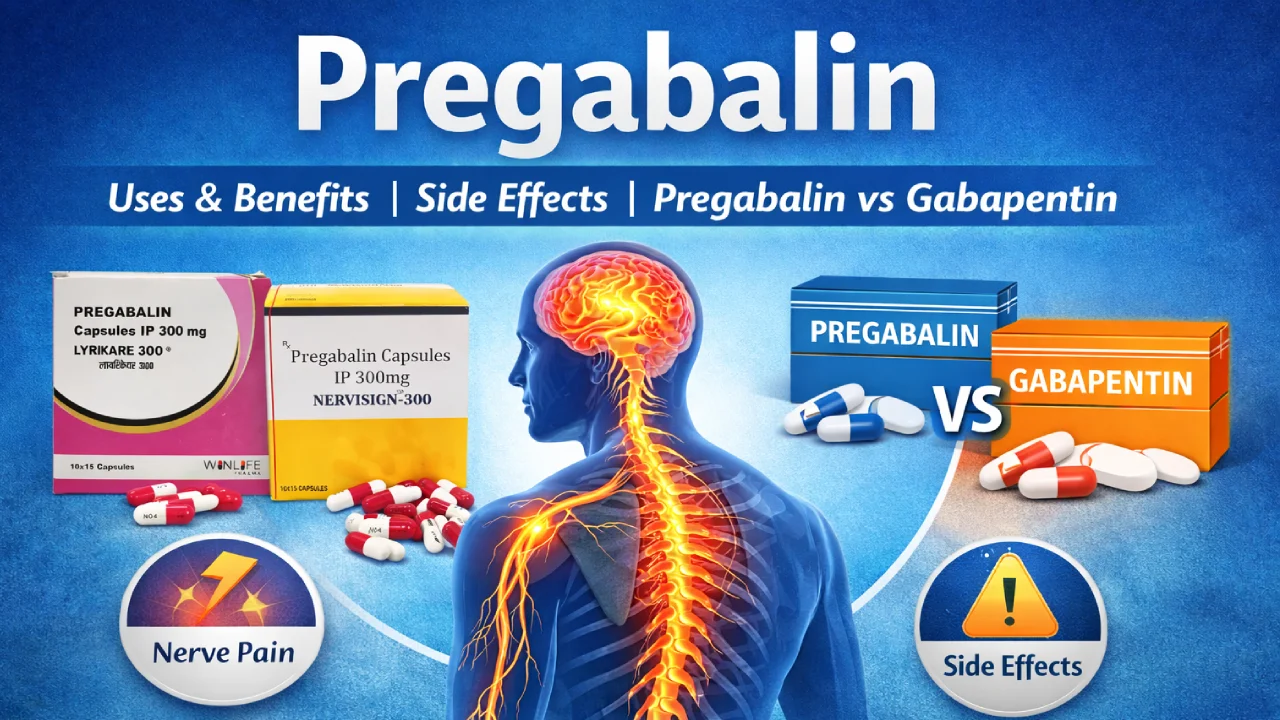
Chronic nerve pain and neurological disorders affect millions of people worldwide. Many patients struggle to find medications that effectively control nerve-related pain without severe side effects. One medication that has become widely used for treating nerve pain and related conditions is pregabalin.
Originally developed as an anticonvulsant medication, pregabalin is now commonly prescribed for nerve pain, fibromyalgia, epilepsy, and anxiety disorders. Because of its effectiveness in stabilizing nerve signals, it has become an important treatment option for people experiencing persistent nerve-related discomfort.
In this guide, we will explain pregabalin uses, how pregabalin works, pregabalin side effects, and the key differences in pregabalin vs gabapentin. We will also answer common questions such as is pregabalin a controlled substance and is pregabalin stronger than gabapentin.
What Is Pregabalin?
Pregabalin is a prescription medication used to treat nerve pain, seizure disorders, and certain neurological conditions. It belongs to a class of medications known as anticonvulsants or nerve pain modulators.
Although pregabalin was initially created to help control seizures, doctors soon discovered that it is very effective at reducing abnormal nerve activity that causes chronic pain.
Pregabalin is commonly available in capsule form with different strengths, including:
- 75 mg
- 150 mg
- 300 mg
- 450 mg
These strengths allow doctors to adjust the dosage depending on the severity of a patient’s condition.
Pregabalin is often prescribed when traditional painkillers fail to provide relief, especially for neuropathic pain, which is pain caused by nerve damage rather than tissue injury.
Pregabalin Uses
Understanding pregabalin uses can help patients better understand why doctors prescribe this medication for several different medical conditions.
Pregabalin medications such as Lyrikare 300 mg Pregabalin Capsules are commonly prescribed for treating neuropathic pain and fibromyalgia because they help calm overactive nerve signals.1. Nerve Pain (Neuropathic Pain)
For patients dealing with persistent nerve pain, medications like Nervisign 300 mg Pregabalin Capsules are often recommended because they help stabilize nerve activity and reduce chronic pain symptoms.The most common use of pregabalin is for treating nerve pain caused by damaged or irritated nerves. This type of pain can occur in several conditions, including:
- Diabetic neuropathy
- Post-herpetic neuralgia (pain after shingles)
- Spinal cord injuries
- Chronic nerve compression
Unlike regular pain medications that target inflammation or injury, pregabalin works directly on the nervous system, helping reduce abnormal nerve signals.
2. Fibromyalgia
Fibromyalgia is a chronic condition that causes widespread pain, fatigue, and sleep problems. Pregabalin is one of the medications approved to treat fibromyalgia symptoms.
It helps calm nerve sensitivity and reduce pain signals in the brain.
3. Epilepsy and Seizure Disorders
Pregabalin is also used as an adjunct therapy for epilepsy, helping control partial seizures when combined with other anti-seizure medications.
4. Anxiety Disorders
In some countries, pregabalin is prescribed for generalized anxiety disorder (GAD) because it helps regulate brain signals related to anxiety and stress.
Also Read: Is Tapentadol Stronger Than Tramadol? A Doctor-Reviewed Comparison
Pregabalin: What Is It Used For in Pain Treatment?
Many people search online for pregabalin what is it used for, particularly when experiencing nerve pain symptoms.
Pregabalin is mainly used to treat pain caused by nerve damage. Symptoms that may indicate nerve pain include:
- Burning sensations
- Tingling or numbness
- Electric shock-like pain
- Sharp shooting pain along nerve pathways
Because pregabalin works directly on nerve communication, it can provide relief when traditional pain medications fail.
How Pregabalin Works
Understanding how pregabalin works helps explain why it is effective for nerve pain and neurological disorders.
Pregabalin works by affecting voltage-gated calcium channels in nerve cells located in the brain and spinal cord.
When nerves are damaged, they can send excessive pain signals to the brain. Pregabalin reduces this abnormal activity by calming the nerve signals responsible for pain transmission.
In simple terms, pregabalin works by:
• Stabilizing nerve activity
• Reducing abnormal pain signals
• Slowing down overactive nerve communication
This leads to reduced pain intensity and improved nerve stability.
Most patients begin to notice improvement within one to two weeks of treatment.
Pregabalin vs Gabapentin
One of the most common comparisons patients search online is pregabalin vs gabapentin.
Both medications are used to treat nerve pain and seizures, and they belong to the same class of drugs. However, there are several differences between the two.
While pregabalin is widely used for nerve pain, some patients are also prescribed gabapentin medications such as Gabasign 800 mg Gabapentin Tablets, which work in a similar way to control nerve activity.| Feature | Pregabalin | Gabapentin |
|---|---|---|
| Drug class | Anticonvulsant | Anticonvulsant |
| Absorption | More predictable | Less predictable |
| Strength | Generally stronger | Mild to moderate |
| Dosage | Lower doses required | Higher doses needed |
| Speed of action | Faster | Slower |
Because pregabalin is absorbed more efficiently by the body, it is often considered more potent than gabapentin.
However, the choice between the two medications depends on the patient’s condition and response to treatment.
Is Pregabalin the Same as Gabapentin?
Another question people frequently ask is is pregabalin the same as gabapentin.
Although they are similar medications, they are not identical.
Pregabalin was actually developed as a newer version of gabapentin, designed to provide more consistent absorption and improved effectiveness.
Both medications work in similar ways, but pregabalin tends to:
- Work faster
- Require lower doses
- Produce more predictable results
Is Pregabalin Stronger Than Gabapentin?
Many patients also wonder is pregabalin stronger than gabapentin.
In general, pregabalin is considered stronger because it binds more effectively to nerve receptors and is absorbed more efficiently by the body.
This means that lower doses of pregabalin can sometimes produce the same effects as higher doses of gabapentin.
However, stronger does not always mean better for every patient. Doctors choose medications based on:
- medical history
- pain severity
- tolerance to medications
- possible side effects
Also Read: Can Pregabalin Cause Weight Gain? What You Need to Know
Pregabalin Side Effects
Like all medications, pregabalin can cause side effects. Most side effects are mild and improve as the body adjusts to the medication.
Common Pregabalin Side Effects
Some of the most frequently reported pregabalin side effects include:
- Dizziness
- Drowsiness
- Dry mouth
- Blurred vision
- Weight gain
- Mild swelling in hands or feet
These symptoms are usually temporary and may decrease after a few weeks of treatment.
Less Common Side Effects
Some patients may experience:
- Difficulty concentrating
- Mood changes
- Increased appetite
- Fatigue
If severe or persistent symptoms occur, medical advice should be sought.
Is Pregabalin a Controlled Substance?
A commonly searched question is is pregabalin a controlled substance.
Yes. In many countries, including the United States, pregabalin is classified as a controlled medication.
This classification exists because the medication can potentially be misused if taken improperly or without medical supervision.
However, when used correctly under medical guidance, pregabalin is considered safe and effective for treating nerve pain and neurological conditions.
How Pregabalin Is Typically Taken
Doctors usually begin treatment with a low dose of pregabalin and gradually increase it depending on how the patient responds.
Typical dosing may include:
- Initial dose: 75 mg twice daily
- Moderate dose: 150–300 mg per day
- Higher doses: up to 450–600 mg daily
Patients should always follow medical guidance when taking pregabalin to ensure safe and effective treatment.
Pregabalin and Long-Term Pain Management
Pregabalin is often most effective when combined with other pain management strategies such as:
- physical therapy
- improved sleep habits
- stress management
- lifestyle changes
This comprehensive approach helps improve long-term outcomes for people suffering from chronic nerve pain.
Conclusion
Pregabalin has become one of the most widely used medications for treating nerve pain, fibromyalgia, epilepsy, and certain anxiety disorders. By stabilizing nerve activity and reducing abnormal pain signals, it provides significant relief for many patients experiencing chronic pain.
Understanding pregabalin uses, how pregabalin works, pregabalin side effects, and the differences between pregabalin vs gabapentin can help patients make informed decisions about their treatment options.
While pregabalin is a powerful medication, it should always be used responsibly and under proper medical guidance.
For people suffering from persistent nerve pain, pregabalin continues to be one of the most effective treatment options available today.
Also Read: Chronic Pain in Adults: Causes and Modern Treatments