

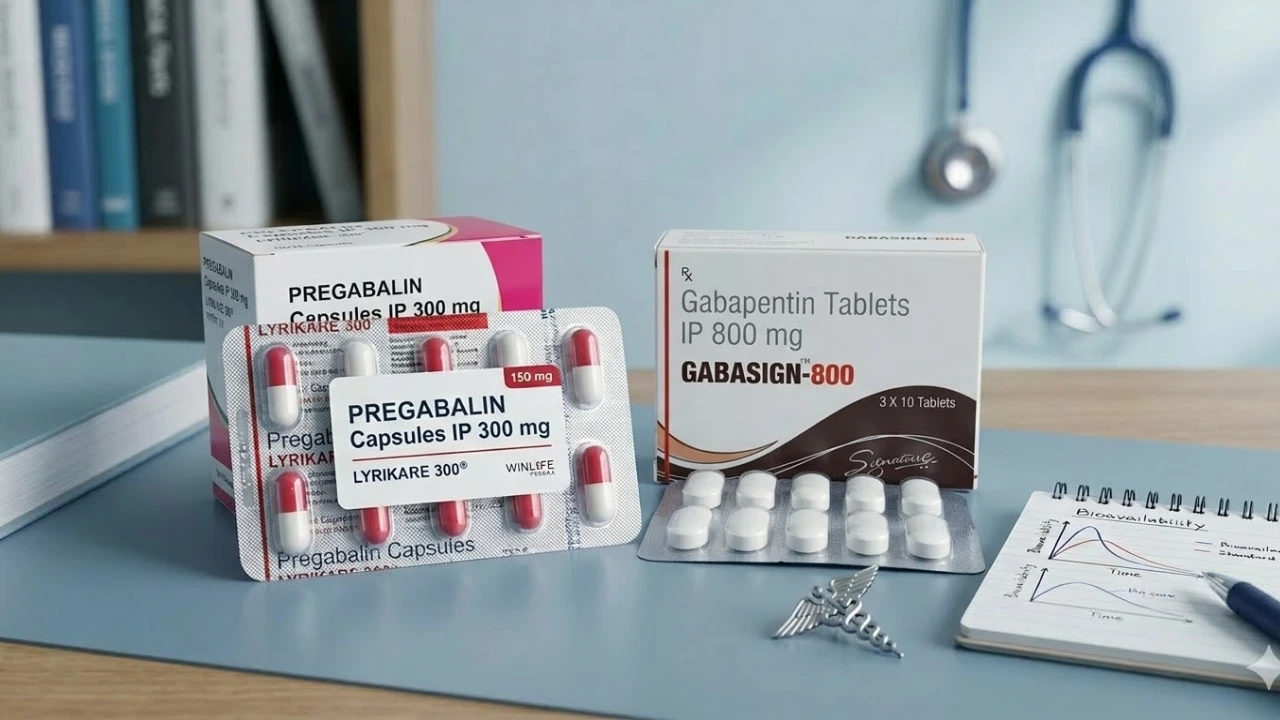
If you’ve been living with the “electric shocks” of nerve pain or the persistent ache of fibromyalgia, you’ve likely heard of two heavy hitters in the world of neurology: Pregabalin (Lyrica) and Gabapentin (Neurontin).
Patients often ask their doctors the same burning question: “Is Pregabalin stronger than Gabapentin?”
The short answer is yes, in terms of mg-for-mg potency and how the body absorbs it. But “stronger” doesn’t always mean “better” for your specific body. In this guide, we’ll break down the science, the side effects, and the real-world experiences to help you understand which of these “gabapentinoids” might be the right fit for your journey toward relief.
The Potency Gap: How Much Stronger Is Pregabalin?
When doctors talk about “strength,” they are usually referring to potency. This means how much of a drug is needed to produce a specific effect.
Research consistently shows that Pregabalin is approximately 2 to 3 times more potent than Gabapentin. ### The Dose Conversion
Because Pregabalin is more concentrated in its effect, the dosages look very different on paper. For example, a common daily dose of Pregabalin might be 150 mg to 300 mg, whereas an equivalent dose of Gabapentin could be anywhere from 900 mg to 1,800 mg.
Note: Never try to “convert” your own dose. If you are switching from Gabapentin to Pregabalin, your doctor will calculate a specific ratio—often starting you at one-sixth of your Gabapentin dose—to ensure safety.
Absorption: Why Pregabalin Hits Differently
The real secret to Pregabalin’s “strength” isn’t just the chemical itself; it’s how your body handles it. This comes down to two medical terms: Bioavailability and Absorption.
Linear vs. Non-Linear Absorption
- Gabapentin (The “Saturable” Drug): Gabapentin has a “ceiling effect.” As you increase the dose, the body’s ability to absorb it actually decreases. If you take a massive dose of Gabapentin, a significant portion of it might simply pass through your system without being used.
- Pregabalin (The “Predictable” Drug): Pregabalin has linear absorption. This means if you double the dose, the amount in your bloodstream doubles predictably. It has over 90% bioavailability, meaning almost every milligram you swallow goes to work.
Speed of Relief
Pregabalin reaches its peak levels in your blood within 1 hour. Gabapentin, on the other hand, can take 3 to 4 hours to reach peak concentration. For someone in acute nerve pain, those three hours can feel like a lifetime.
Comparison Table: At a Glance
| Feature | Gabapentin (Neurontin) | Pregabalin (Lyrica) |
| Potency | Lower (Requires higher mg) | Higher (Lower mg needed) |
| Absorption | Variable and slows at high doses | Highly predictable and linear |
| Peak Blood Level | 3–4 Hours | ~1 Hour |
| FDA Approved For | Shingles pain, Seizures | Fibromyalgia, Diabetic Nerve Pain, Shingles, Spinal Cord Injury |
| Common Dosing | 3 times a day | 2 to 3 times a day |
Which One Works Better for Pain?
While Pregabalin is technically “stronger,” clinical studies show a more nuanced picture.
For Nerve Pain (Neuropathy)
In many head-to-head trials, Pregabalin has shown a slight edge in reducing pain scores more quickly. A 2025 meta-analysis indicated that patients on Pregabalin reported more “pain-free days” compared to those on Gabapentin. However, for many, the ultimate level of pain relief achieved was similar once the “right” dose was found for each drug.
For Fibromyalgia
Pregabalin is FDA-approved specifically for fibromyalgia, whereas Gabapentin is often used “off-label.” Some patients find that the predictable absorption of Pregabalin helps manage the “fibro fog” and widespread pain more consistently throughout the day.
Also Read: Pregabalin: Uses, How It Works, Side Effects, and Pregabalin vs Gabapentin
The Trade-Off: Side Effects and Safety
“Stronger” often comes with a higher risk of side effects. Both drugs work by calming down overexcited nerves, which can lead to a “slowing down” feeling in the rest of the body.
Shared Side Effects:
- Dizziness and Drowsiness: The most common “complaints” for both.
- Peripheral Edema: Swelling in the hands, legs, or feet.
- Dry Mouth and Blurred Vision.
The Weight Gain Factor
While both can cause weight gain, Pregabalin is more frequently associated with increased appetite and significant weight changes compared to Gabapentin.
Regulation and Abuse Potential
In 2026, the medical community remains cautious about the misuse of these medications. Pregabalin is classified as a Schedule V controlled substance in the U.S. because it can produce a sense of euphoria in some users. Gabapentin is currently unscheduled at the federal level but is strictly monitored in many states due to its potential for misuse when combined with other substances.
The “Human” Factor: Why Your Choice Matters
Choosing a medication isn’t just about a lab report; it’s about your life.
- The Cost Factor: Gabapentin has been generic for a long time and is generally very affordable. While Pregabalin is also available as a generic, it can still be more expensive depending on your insurance tier.
- The Routine: If you struggle to remember mid-day doses, Pregabalin’s twice-daily option might be more convenient than Gabapentin’s typical three-times-a-day schedule.
- The Sensitivity Factor: Some people find Gabapentin “gentler.” Because it absorbs more slowly, the side effects might not hit as hard or as fast as they do with Pregabalin.
Also Read: Can Pregabalin Cause Weight Gain? What You Need to Know
Frequently Asked Questions (FAQ)
Can I switch from Gabapentin to Pregabalin?
Yes, many patients switch if Gabapentin isn’t providing enough relief or if the side effects are too much. However, this must be done under strict medical supervision to avoid withdrawal symptoms like anxiety, insomnia, or nausea.
Is Pregabalin an opioid?
No. Neither Pregabalin nor Gabapentin are opioids. They are classified as anticonvulsants (gabapentinoids). They do not bind to opioid receptors, though they are often used alongside other treatments for complex pain.
Does “stronger” mean it will cure my pain faster?
It reaches peak levels faster (1 hour vs 3-4 hours), but for chronic conditions, it can still take 1 to 2 weeks of consistent use to feel the full therapeutic benefit.
Final Thoughts: The Right Strength for You
Is Pregabalin stronger than Gabapentin? Scientifically, yes. It is more potent, absorbs better, and works faster.
However, the “strongest” medication is the one that allows you to play with your grandkids, get through your workday, and sleep through the night without debilitating side effects. For some, that is the reliable, slow-and-steady Gabapentin. For others, it’s the fast-acting, high-potency Pregabalin.
Always consult with your pain specialist or neurologist before making changes to your medication regimen.
Also Read: How Long Should I Take Pregabalin for Nerve Pain?